Water stress: when to bring the harvest forward
In 2026, on the Ligurian coast, the grapes stopped ripening in mid-August. How I read the vintage from the coast to the mountains, why I brought the harvest forward in many cases, and what I recommend for the next hot summer.
In 2026, in some vineyards on the Ligurian coast, the grapes stopped ripening in mid-August. Sugar was no longer rising, acidity kept falling and pH kept climbing. Waiting would not have produced better fruit, only a flatter wine.
In this article I describe how I read the vintage in the vineyards I work with in Liguria, from the coast to the mountains, and why in many cases I chose to pick early. Alongside the numbers of the season you will find what the research says about water stress, and what I suggest preparing for the next hot summer.
Three belts, three different vintages
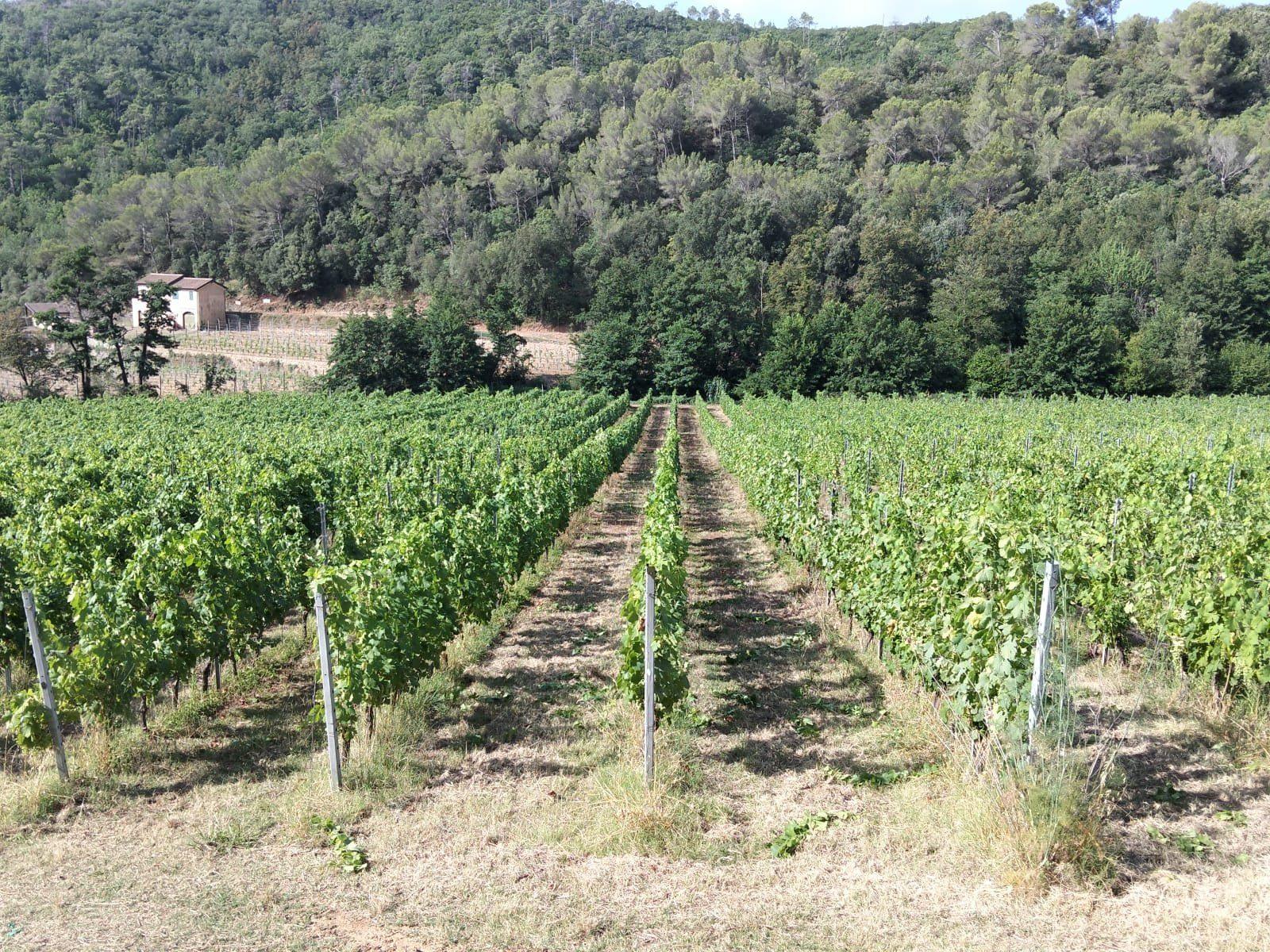
In Liguria the same summer produced three different vintages: on the coast water stress was severe, in the near inland belt it arrived in August, and in the mountains the vines suffered but held on.
The general picture comes from ARPAL, the regional environmental agency. Spring 2026 was the warmest since 2003, with a particularly dry April. Summer 2026 was the warmest ever recorded in the region: +2.5 °C on average compared with the 2003–2022 period, and 59 days of extreme heat against 30 in 2022 and 16 in 2003.
| Belt | Areas | Varieties | How it went | Harvest start |
|---|---|---|---|---|
| Coast | Ponente, between Sanremo and Diano Marina | Pigato, Vermentino, Moscato bianco, Granaccia | Severe water stress, ripening at a standstill | Mid-August for the whites, late August for the reds |
| Near inland | Val Nervia, Prino valley, Albenga plain | Rossese, Pigato, Vermentino, Granaccia | Enough rain in spring, signs of deficit in August | Late August |
| Mountains | Upper Valle Arroscia, inland La Spezia | Ormeasco, Moscato bianco, Granaccia, Cabernet Sauvignon, Merlot | Vines often under strain, but they held on | Mid-September |
The ARPAL stations closest to the vineyards tell the same story. In spring it rained less than normal everywhere, but the largest deficit was on the coast. In summer the coast and the near inland belt stayed below average, while the mountains had more rain than usual.
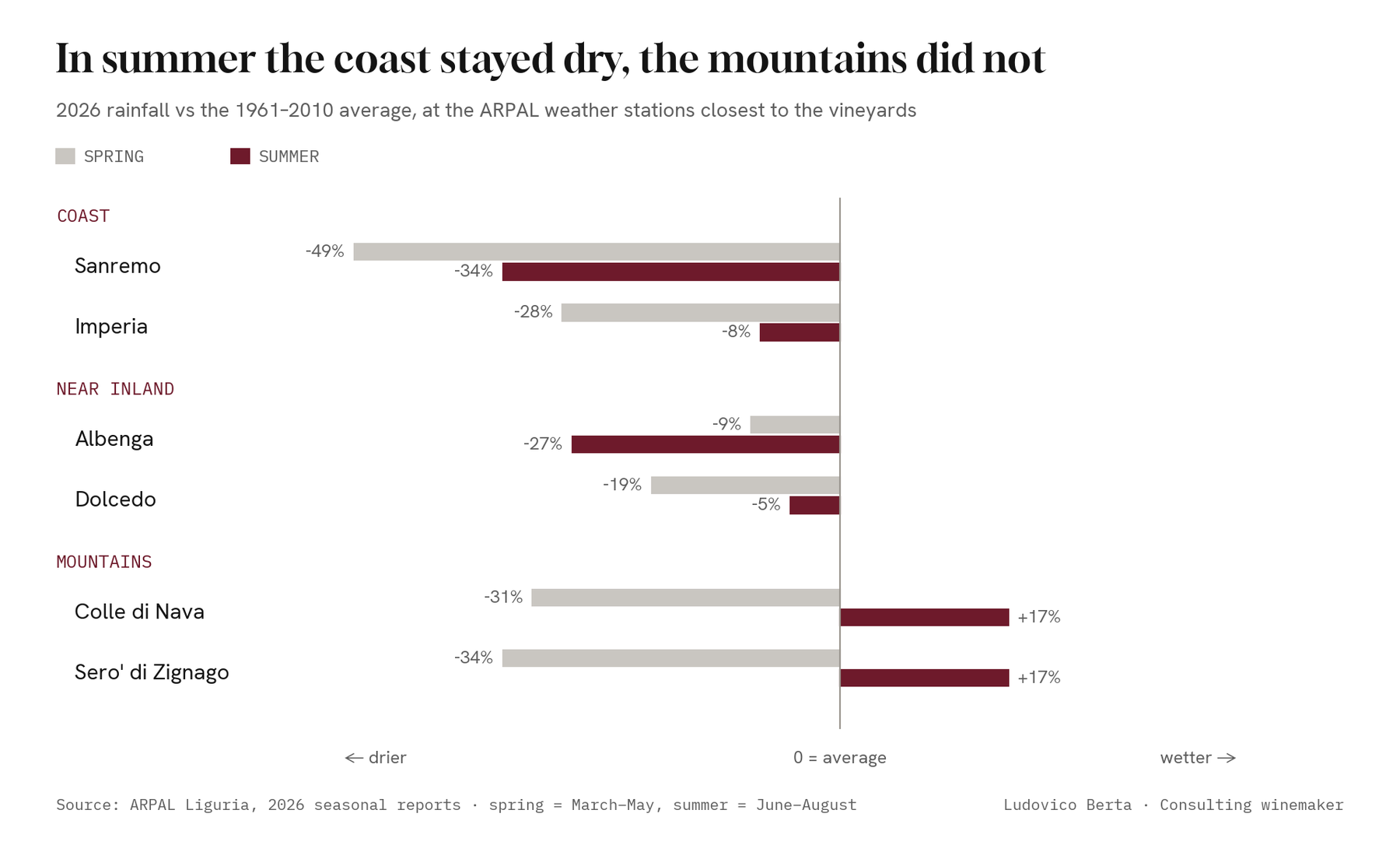
That +17% in the mountains needs reading with care, though. At a vineyard weather station in the Zignago area, June and July together gave just 51 mm. Almost all the summer rain came in August, 200 mm, and 152 of those fell between 20 and 22 August in a single storm (126 mm on the 21st). The vines therefore reached the end of August after two almost dry months.
What water stress does to the grapes
A moderate water deficit can improve the fruit, especially for reds. A severe one, combined with heat, slows ripening and burns through acidity.
Moderate and severe are not the same thing. In Bordeaux a mild deficit gave smaller berries, more anthocyanins and the highest sugar content; a severe one brought losses in quality (van Leeuwen et al., 2009). The review by Rienth et al. (2016) reaches the same conclusion: a moderate deficit is generally favourable for reds, a severe one is negative, including for white aromatics.
Sugar stops arriving. Under severe stress the stomata close and photosynthesis drops (Rienth et al., 2016). On top of that, once the berry has reached its maximum volume the vine stops loading it with sugar. From that point the potential alcohol only rises because the berry is losing water (Bigard et al., 2019). A degree that climbs in shrivelling fruit is concentration, not ripening.
Acidity is consumed mainly by heat. Malic acid degradation during ripening is more pronounced at high temperatures (Rienth et al., 2016). In a controlled trial, heat stress cut malic acid by 40–52% and titratable acidity by 26–32%, raising pH; water stress on its own did not have this effect (Hewitt et al., 2023). In 2026, on the Ligurian coast, heat and drought arrived together.
pH also depends on potassium. Potassium is the most abundant cation in the berry: it binds to tartaric acid, raises the pH of must and wine, and reduces the coloured form of anthocyanins (Rogiers et al., 2017).
Colour suffers from heat on the bunch. Light increases anthocyanins, but west-facing clusters exceeding 40 °C accumulated fewer of them; cooling sun-exposed clusters made them rise (Spayd et al., 2002).
How I recognised it
I saw the stress first in the vineyard and then in the numbers: the classic signs on the plant and, in the ripening curves, sugar standing still while pH and acidity kept moving.
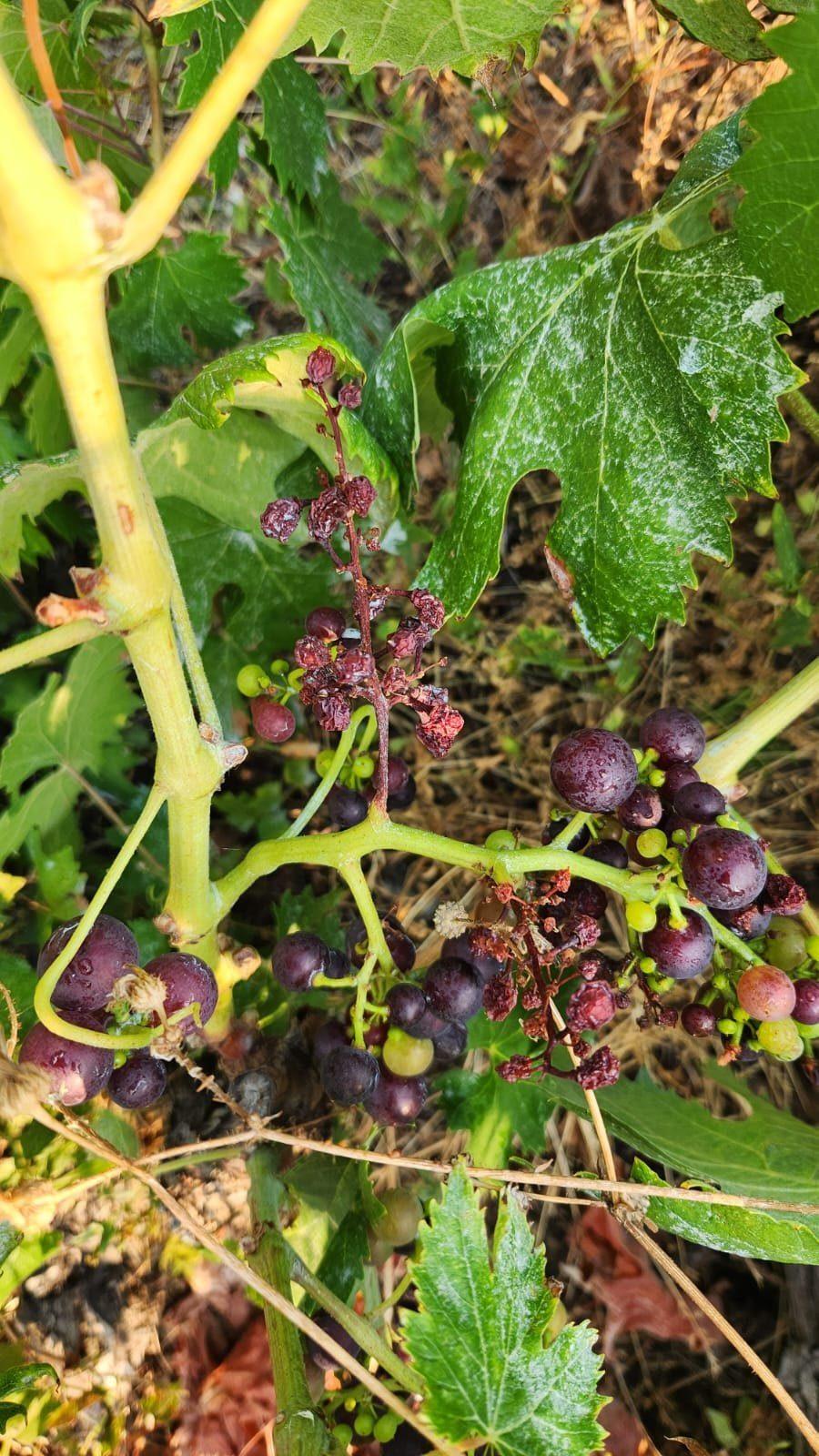
In the vineyard. Where the deficit was strong the signs were the textbook ones: yellow basal leaves, dry tendrils and, in some cases, shrivelling berries. These are not impressions: in unstressed vines the tendrils are turgid, while even a moderate deficit makes them wilt, and the slowdown in shoot tip growth is another indicator in use (Rienth and Scholasch, 2019). Observing shoot tips systematically gives a reliable reading of vine water status without instruments (Pichon et al., 2024).
In the ripening curves. The decisive signal came from sampling. In some vineyards, from one sample to the next, sugar was no longer rising while pH climbed and acidity fell. That is consistent with the picture described above: little new sugar reaching the berry, and heat still consuming malic acid. From that point on, waiting would not have improved the fruit.
The decision: picking early
Where the fruit had stalled I chose to pick sooner, accepting lower potential alcohol in order to save the acidity.
By waiting, in certain areas I would have picked fruit with potential alcohol probably above 14% vol. I would have risked overripe notes, a serious problem when the aim is a fresh wine. And the longer the fruit hangs, the greater the risk that wildlife gets to it.
On the coast, for Pigato and Vermentino, we often picked at around 12% vol potential. It was a deliberate choice: keep total acidity above 5 g/L (as tartaric acid) and pH below 3.4. It is also the direction the market is asking for today, with lower-alcohol, fresher wines.
The reds were picked at potential alcohol between 12.5 and 14.5% vol. The higher figures concern fine wines destined for long ageing, where greater ripeness was intended.
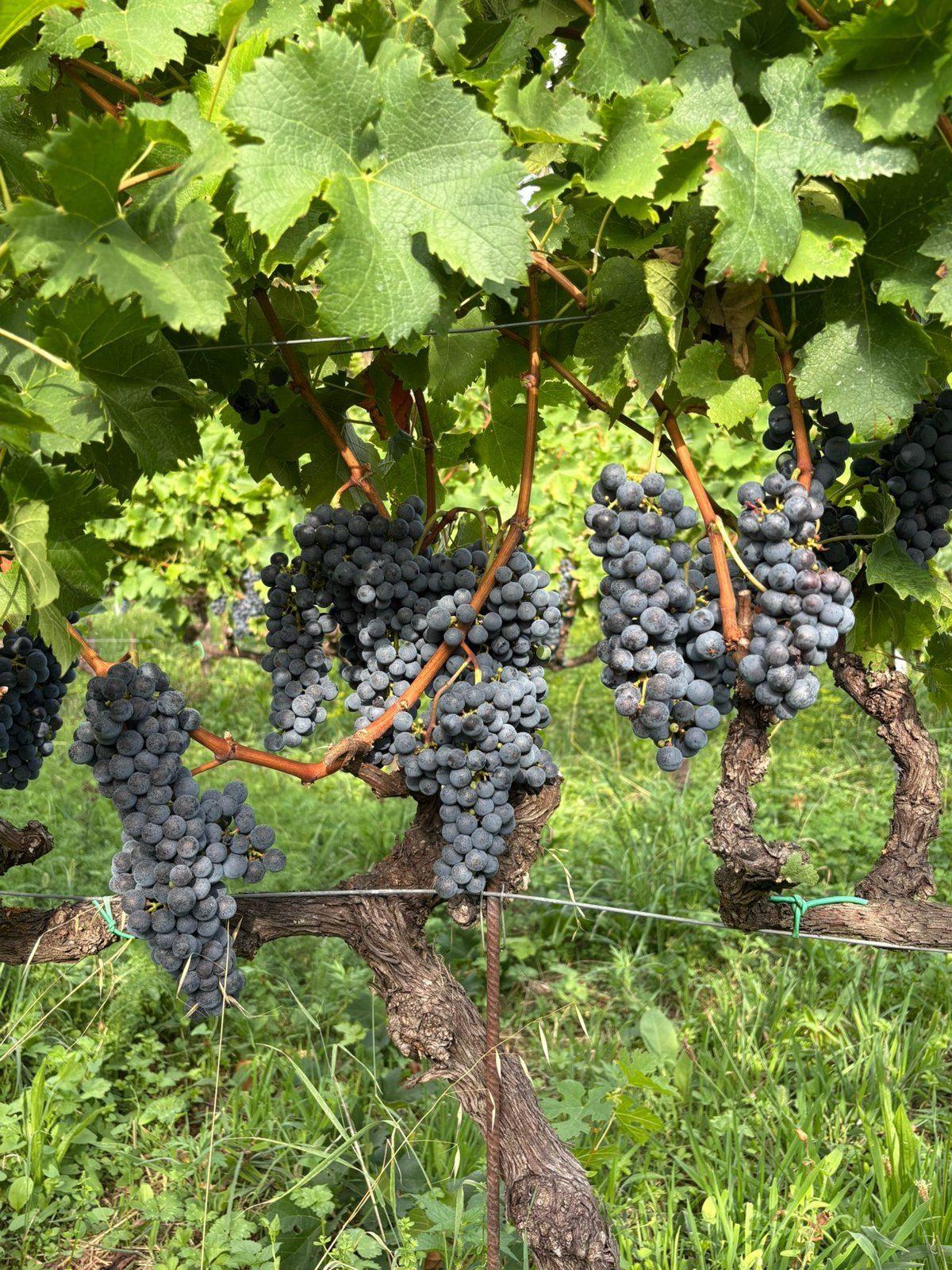
Picking early has a cost. You give up some ripeness and some structure, and you accept a lighter wine. With fruit that had stopped ripening, though, the alternative was a wine with more alcohol and less life, not a riper wine.
Two tools: kaolin in the vineyard, acidifying yeasts in the cellar
In the vineyard I recommended kaolin to everyone; in the cellar, on some lots, I used acidifying yeasts to have higher-acid blending material.
Kaolin. It is a white clay sprayed onto the canopy, forming a film that reflects part of the radiation. The studies describe it as a help, not a complete solution. In a two-season trial it lowered leaf temperature by up to 2.8 °C and berry temperature by up to 2.0 °C, but it did not prevent sunburn entirely and did not change berry composition (Teker, 2023). In Portugal, in a summer of strong stress, it improved water use efficiency and photosynthesis in the treated vines (Bernardo et al., 2021). Another study found more phenolics and anthocyanins in ripe berries (Conde et al., 2016).
Acidifying yeasts. I used Lachancea thermotolerans, a yeast that produces lactic acid during fermentation and lowers the pH of the wine. The effect varies a great deal from strain to strain: the literature reports lactic acid production from 1.8 to 12 g/L, and pH drops of up to 0.59 units. Because Lachancea ferments poorly, it is used together with Saccharomyces cerevisiae to finish the fermentation (Vicente et al., 2021).
I did not use them on every lot, only on some destined for blending. In the blend, those lots raise the acidity of the final wine without putting the whole production through a different yeast.
For the next hot vintage
Vintages like 2026 are managed mostly before the harvest. To a winery I recommend six things.
- Organise the logistics in advance. If the harvest starts in mid-August, crews, crates, presses and cellar space have to be ready before then.
- Start sampling early. Beginning well ahead of the usual date makes it possible to build complete ripening curves and to see, in time, the moment when sugar stops.
- Prepare higher-acid blending lots. Acidifying yeasts on a few lots give you a reserve of acidity to use in the blend.
- Use the canopy as shade. Where the clips on the top pair of wires can be opened and closed, leave them open: the upper canopy falls back and shades the bunches. The aim is to stop the clusters overheating, not to take them out of the light altogether, which the colour needs (Spayd et al., 2002).
- Invest in water. In 2026, in the vineyards where emergency irrigation was possible, the fruit ripened very well and without signs of stress. That is why I think it makes sense to invest in water storage and irrigation systems, to be used only when needed and where the appellation rules allow it. The literature points the same way: the aim is not to eliminate every deficit, which can benefit quality when mild, but to avoid a severe one (van Leeuwen et al., 2009; Rienth et al., 2016).
- Choose the site carefully. On the coast and in the near inland belt, for new plantings it is worth considering less exposed slopes, where the fruit heats up less. In the mountains, no: there a poorly exposed slope risks not ripening the fruit at all. Site selection is among the long-term adaptation strategies reviewed in the literature (Naulleau et al., 2021).
If you are thinking about how to prepare your winery for the next hot vintage, get in touch.
References
Weather data
- ARPAL Liguria (2026). Primavera 2026: in Liguria la più calda dal 2003 (in Italian).
- ARPAL Liguria (2026). Seasonal reports 2026, rainfall for spring and summer, anomalies against the 1961–2010 climate (in Italian).
- Genova24 (2026). Estate 2026 la più calda in Liguria, i dati ARPAL (in Italian).
Scientific literature
- Bernardo S., Dinis L.-T., Luzio A. et al. (2021). Optimising grapevine summer stress responses and hormonal balance by applying kaolin in two Portuguese Demarcated Regions. OENO One.
- Bigard A., Romieu C., Sire Y., Veyret M., Ojéda H., Torregrosa L. (2019). The kinetics of grape ripening revisited through berry density sorting. OENO One.
- Conde A., Pimentel D., Neves A. et al. (2016). Kaolin foliar application has a stimulatory effect on phenylpropanoid and flavonoid pathways in grape berries. Frontiers in Plant Science, 7, 1150.
- Hewitt S., Hernández-Montes E., Dhingra A., Keller M. (2023). Impact of heat stress, water stress, and their combined effects on the metabolism and transcriptome of grape berries. Scientific Reports, 13, 9907.
- Naulleau A., Gary C., Prévot L., Hossard L. (2021). Evaluating strategies for adaptation to climate change in grapevine production – a systematic review. Frontiers in Plant Science, 11, 607859.
- Pichon L., Laurent C., Payan J.-C., Tisseyre B. (2024). Observation of shoot growth: a simple and operational decision-making tool for monitoring vine water status in the vineyard. OENO One.
- Rienth M., Scholasch T. (2019). State-of-the-art of tools and methods to assess vine water status. OENO One, 53.
- Rienth M., Scholasch T., Sweetman C., Cadot Y. (2016). Review of water deficit mediated changes in vine and berry physiology; consequences for the optimization of irrigation strategies. OENO One.
- Rienth M., Torregrosa L., Sarah G., Ardisson M., Brillouet J.-M., Romieu C. (2016). Temperature desynchronizes sugar and organic acid metabolism in ripening grapevine fruits and remodels their transcriptome. BMC Plant Biology, 16, 164.
- Rogiers S.Y., Coetzee Z.A., Walker R.R., Deloire A., Tyerman S.D. (2017). Potassium in the grape (Vitis vinifera L.) berry: transport and function. Frontiers in Plant Science, 8, 1629.
- Spayd S.E., Tarara J.M., Mee D.L., Ferguson J.C. (2002). Separation of sunlight and temperature effects on the composition of Vitis vinifera cv. Merlot berries. American Journal of Enology and Viticulture, 53(3), 171–182.
- Teker T. (2023). A study of kaolin effects on grapevine physiology and its ability to protect grape clusters from sunburn damage. Scientia Horticulturae, 311, 111824.
- van Leeuwen C., Trégoat O., Choné X., Bois B., Pernet D., Gaudillère J.-P. (2009). Vine water status is a key factor in grape ripening and vintage quality for red Bordeaux wine. How can it be assessed for vineyard management purposes? Journal International des Sciences de la Vigne et du Vin, 43(3), 121–134.
- Vicente J., Navascués E., Calderón F., Santos A., Marquina D., Benito S. (2021). An integrative view of the role of Lachancea thermotolerans in wine technology. Foods, 10(11), 2878.